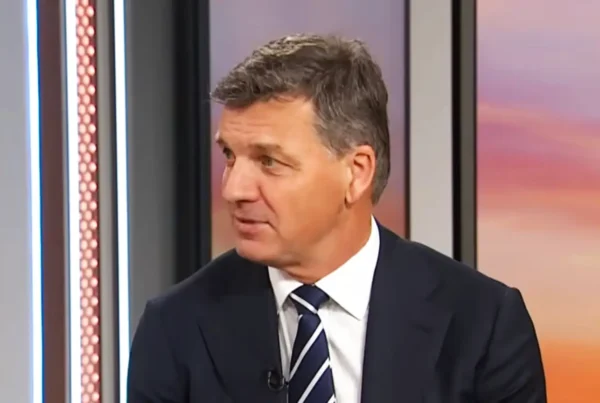
There are four common fail points in a crisis
- The narrative. If the behaviours and key messages aren’t convincing, the response fails.
- The spokesperson. If they aren’t convincing either, the same result follows.
- The Crisis Management Team. It needs the right mix of expertise, particularly in managing hostile media and other stakeholders. The temptation is to assume complex trust issues can be muddled through with simple responses. If the CMT isn’t equal to the task, it fails.
- Board and executive unity. Culture and values are formed here. There is strength in unity, and a common fail point is division at the top leading to lowest-common-denominator decisions. This often happens because a crisis rarely has a genuinely good outcome, at best the needle moves from “very bad” to “less bad”, and that reality breeds frustration and exposes division among leaders.
Only once the crisis itself is managed does the underlying cause deserve attention. It sounds counterintuitive, but the order matters: manage the crisis first, then address what actually caused it.
Rebuilding trust takes years, not a press cycle
Back to the banks, and the downward spiral from trust. Bad behaviour in Australian banking has been almost continuous for years, arguably since the Fourex scandals during the interest rate spiral of the 1980s. It has been death by a thousand cuts, and the same pattern of trust collapsing under sustained pressure is explored further in Politicians, Bankers, and the Fragility of Trust, published a month before this piece.
If the banks genuinely want to be trusted, the smarter move is to ask for a royal commission themselves, a deep dive into the cultural issues, and the chance to comprehensively reset the trust ledger.
The latest Commonwealth Bank money-laundering scandal is a case in point. The regulator’s focused probe, run by APRA, is too narrow. It does little to address the many other causes of distrust. It is piecemeal, and it will not achieve the one thing banks and politicians both claim to want: genuine trustworthiness.
By comparison, the Royal Commission into Institutional Responses to Child Sexual Abuse shone light into the darkest corners of the organisations it examined. That scrutiny created immediate and lasting culture change, not only within the organisations directly involved, but across every similar organisation watching the coverage unfold.
The slow path is still the fastest one available
Yes, a royal commission into the banks will take years. But it is probably the fastest realistic way to rebuild bank culture and restore public confidence; the alternative, a narrow regulatory probe followed by another scandal in eighteen months, only extends the spiral this piece opened with. Genuine reputation management was never going to come from a faster process. It comes from the more thorough one.
Criticism imposes confronting choices on an organisation. Repeated criticism, particularly in the media, starts a downward spiral: it erodes trust, which inspires more criticism, which erodes trust further still.
The most visible version of that spiral is playing out with slow-learning politicians globally, who repeatedly show themselves unable to respond to voters’ concerns. But the same pattern applies everywhere else. Trust in company executives, bankers, lawyers, and medical professionals used to be automatic. That era has passed. Exposés on television, activists finding a voice on social media, and a global news cycle mean flaws are now exposed to an increasingly cynical public.
Trust has to be hard-earned now, and one of the clearest ways leaders earn it is by handling criticism, and crisis, effectively. This is the discipline behind crisis communications: getting the narrative, the spokesperson, the team, and the leadership response right before the story gets away from you. Australia has no shortage of recent examples of organisations failing that test, the Commonwealth Bank and Dreamworld among them, and each failure adds to the broader erosion of public trust.

The author – Peter Wilkinson