

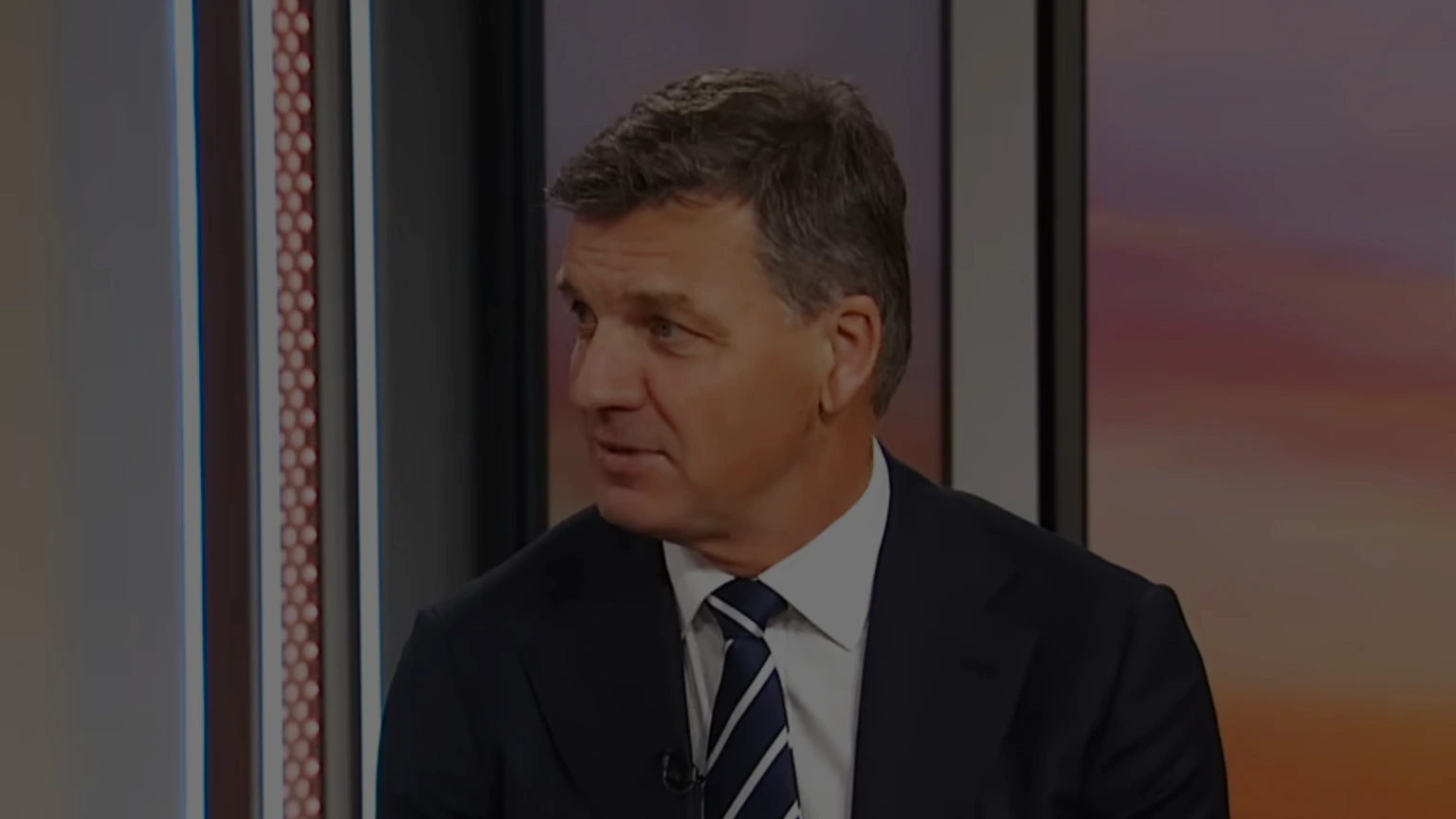
“Leaders who can’t articulate what they stand for, in language their stakeholders can repeat, get replaced by people who can. It doesn’t matter how smart they are.”
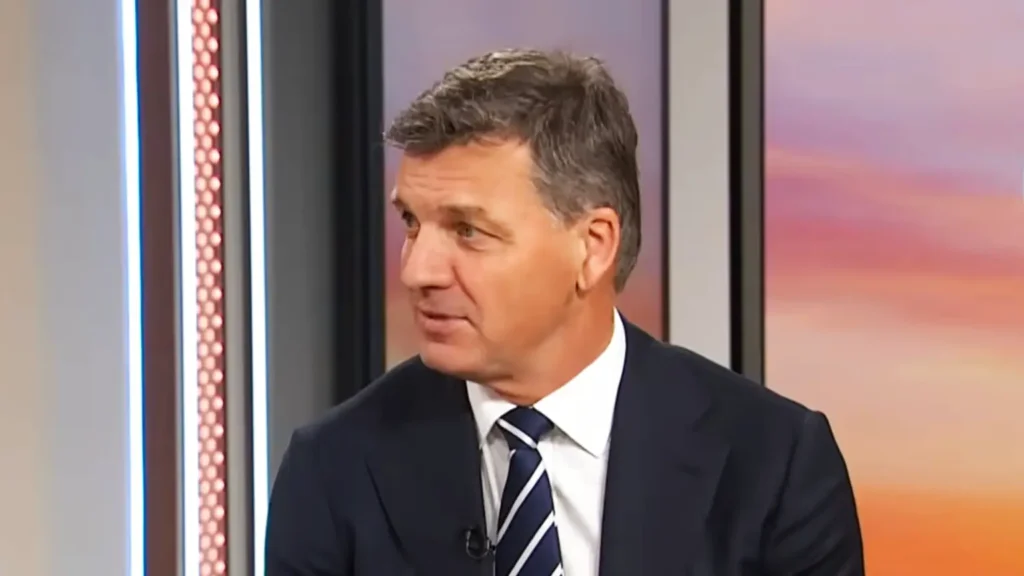
Angus Taylor speaking during a television interview.
Five plus months in, and most Australians couldn’t name a single thing Angus Taylor stands for.
That’s a communications failure. The kind that ends careers, in politics and in business.
Taylor is a Rhodes Scholar, a former McKinsey partner, and a competent policy thinker. He is fit, good-looking and energetic. But none of that matters if nobody knows what he’s for.
Taylor took the Liberal leadership in February after defeating Sussan Ley. He inherited a party polling below One Nation nationally and bleeding seats to Teal independents in the cities. The Farrer by-election in May delivered the verdict: the Liberal primary vote collapsed from 43 per cent to 12 per cent. One Nation’s David Farley won the seat. The numbers have barely moved since.
The three-front war
Most opposition leaders fight on one front. Taylor fights on three: Hanson has captured the conservative base, Teals to his left, and a Labor government with an enormous majority.
That squeeze won’t fix itself.
The invisibility problem
In crisis communications, we talk about three messages every leader needs: the incident message, the company message, and the personal message. Taylor has the first, intermittently. He responds to events. He doesn’t have the second or the third.
There’s no organising idea. No phrase anyone can repeat. No vision statement that a voter, a journalist, or a donor could recite from memory. As a speechwriter once said to me, “Repetition = penetration = impact”. You can’t repeat what doesn’t exist.
Compare Hanson, whose messaging is unmistakable. She owns immigration, and a brand of grievance politics. Peter Malinauskas in South Australia won a landslide in March by projecting values, not just policies: hard work, unity, a recognisable Aussie-ness that voters could see themselves in.
Compare, also, the Liberal Party’s President Tony Abbott, who has no problem articulating personal or Liberal values.
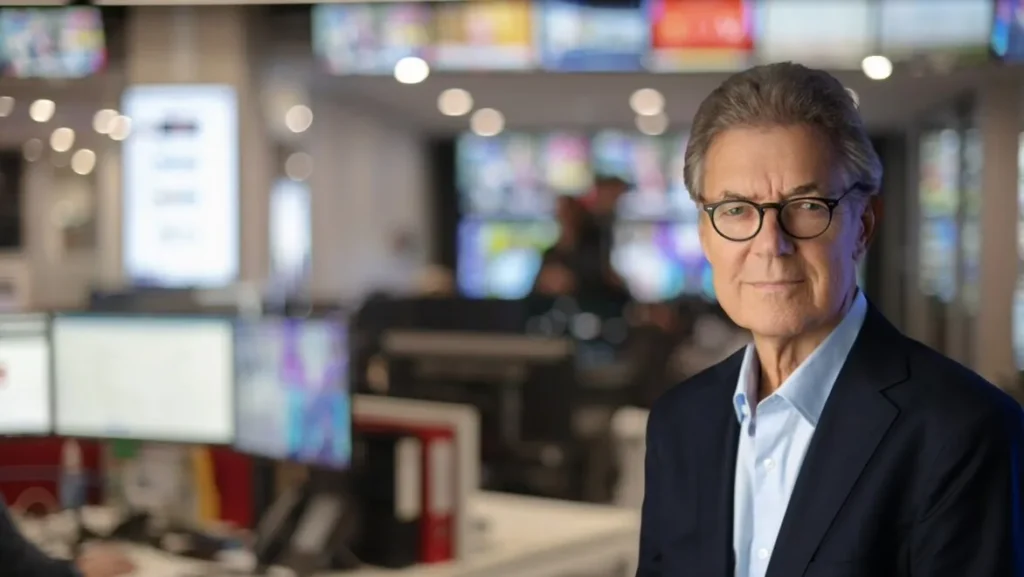
The author – Peter Wilkinson
Four lessons from watching Angus Taylor
Taylor’s shortcomings are worth studying because they’re the same mistakes boards and CEOs make every day.
They’re important. The Edelman Trust Barometer tells us 62% of Australians hold moderate or high grievance against government and business, and 66% believe business leaders deliberately mislead the public. That’s the environment every leader operates in, not just Taylor.
Define what you stand for. Or someone will define it for you. Taylor hasn’t articulated a personal philosophy. Hanson has. Malinauskas has. Hawke did. Howard did. Each led with a set of values voters could test. Trust = Truth + Transparency + Traceability. Taylor can’t build trust because there’s no truth to trace. He’s not hiding anything. He’s just not saying anything.
Pick one fight and win it. Taylor is trying to walk the line between the Teals, Hanson and Labor. The result is noise, not signal. You can’t be consistent across multiple fronts. So, pick one, for instance, the cost of living, own it, then move.
Make your personal voice your loudest. Tony Abbott commands more attention than Taylor because Abbott has convictions and a track record of stating them. Angus has to become his unmistakable self. Every CEO who’s been overshadowed by a chair or a founder knows this dynamic.
Without a message, it’s just a countdown. CEOs know they must deliver or move on. Taylor’s personal ratings are deteriorating, not improving. The Liberal Party moved from Abbott to Turnbull to Morrison in five years. Loyalty is a resource it spends quickly.
The business parallel is exact
Leaders who can’t articulate what they stand for, in language their stakeholders can repeat, get replaced by people who can. It doesn’t matter how smart they are.
Would your board back a CEO who’d been in the role for five plus months and still couldn’t tell the market what the company stands for? The problem isn’t Taylor specifically. It’s that the Liberal party hasn’t decided what it wants to say.
The vision thing
It should be noted that in the current political theatre, there’s a vacuum of vision.
Pauline Hanson is very good on personal values and the One Nation brand, it’s vision that she struggles to articulate.
And to me, Anthony Albanese, for his impressive tactical successes, lacks an identifiable vision for this country.
It’s a clear opportunity for Angus Taylor. Or his replacement.
There’s a vision vacuum in Australian politics and Taylor can fill it with recognisable values. But he has to believe it, and then he has to say it, and say it, and say it.

