
This sentence should be on the wall of every boardroom in Australia: Trust = Truth + Transparency + Traceability.
It’s where we start with every client coming out of a crisis. And it still looks like KPMG is struggling on all three counts.
Reported in the AFR, IAG ‘dumps’ KPMG as its auditor on Friday, ending a 26-year relationship worth $11.6 million a year.
The same day, detailed new allegations emerged that Macquarie director Michelle Hinchliffe helped KPMG wargame its bid for the bank’s ‘$100 million-a-year’ audit. Also reported in the AFR.
The day before, AFR’s Hannah Wootton took apart KPMG’s latest self-commissioned investigation. She reported that the Andrews Group and Gentilin review was barred from investigating culture, from assessing earlier botched investigations, and key individuals were ‘unavailable’ for interviews.
Three stories in 48 hours. Each one reaching the boards and executives that decide who gets KPMG’s work.

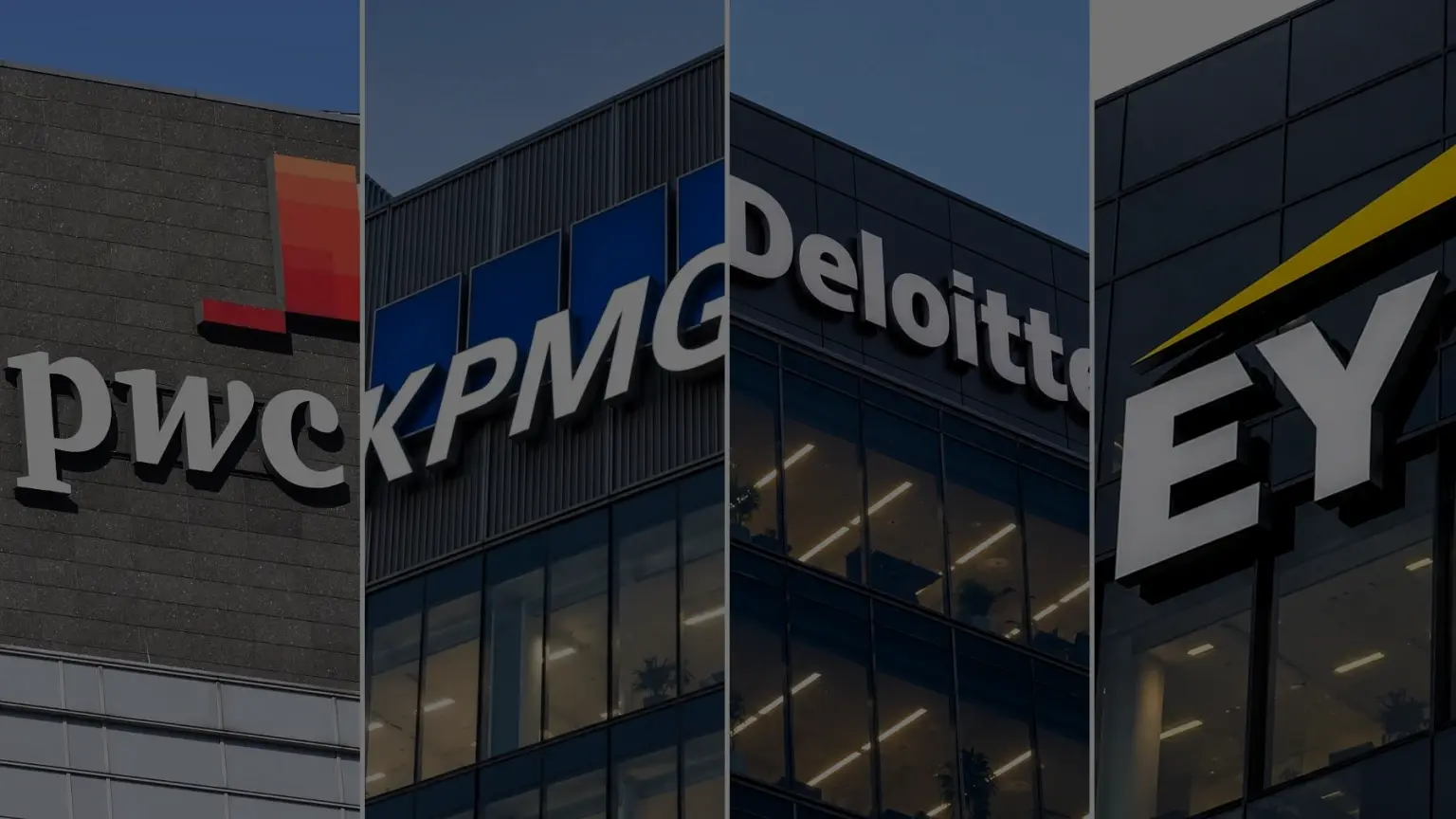
The lineup: Timing is important now for the Big Four accounting firms
The reputation rebuild can’t get started
Every leader reviewing a communication plan has to start with this question: “Are we doing the minimum we can get away with, or are we creating something that will make our staff and clients proud?” That is the springboard.
The first costs less in the first weeks and more in the years after. The second costs more in the first weeks and pays for itself for years.
Roy Morgan’s research is consistent with what we see in reputation management practice: trust recovery after a crisis can take five years or more, depending on how it’s approached. Repeated negative news hinders that. KPMG isn’t there yet.
Every fresh disclosure resets the reputational clock.

The Author – Peter Wilkinson
You can’t rebuild while the building is still on fire
John Sams has handled the communications competently since taking over as CEO. He’s acknowledged failures. He’s fronted the parliamentary committee. He hasn’t hidden behind legal language. So far, his personal reputation is intact.
The chair, Michael Ebeid, arrived with a problem of his own making. Within 24 hours of Senator O’Neill airing the whistleblower’s allegations in March, Ebeid emailed KPMG directors calling them “completely false”.
He’s since called his own words “naive, embarrassing and wrong on every level”. But a chair appointed to restore trust has his own in question.
Then there’s global. Gary Wingrove takes over as KPMG’s worldwide chairman and CEO on 1 October. He was CEO of KPMG Australia from 2013 to 2021. The culture that produced this crisis also developed on his watch.
The dynamic between Sams, Ebeid, and Wingrove will determine whether KPMG Australia gets a genuine reset or a managed narrative.
The pattern
Allens. Ashurst. Ashurst again. Now Andrews Group and Gentilin.
The pattern is unmistakable. KPMG commissions a review. It sets the scope. The scope appears to exclude the questions that matter. The O’Neill committee or the AFR take it apart. KPMG promises the next review will be broader.
Trust in crisis communications depends on truth, transparency, and traceability. KPMG didn’t relentlessly pursue the truth. The reports limit what investigators could examine. And when Parliament and the AFR supply the traceability, the most recent inadequate behaviour becomes the story.
There’s a price to getting the clock started.
References include:
- IAG dumps KPMG from $11.6m audit after more than two decades, Edmund Tadros, AFR, 18 September 2026
- Inside the KPMG whistleblower claims rocking Macquarie’s board, Tadros, Wootton and Moullakis, AFR, 18 September 2026
- KPMG’s latest ‘independent’ investigation brings deja vu, Hannah Wootton, AFR, 17 September 2026
- Roy Morgan Benchmark Recovery Rate, October 2025, roymorgan.com